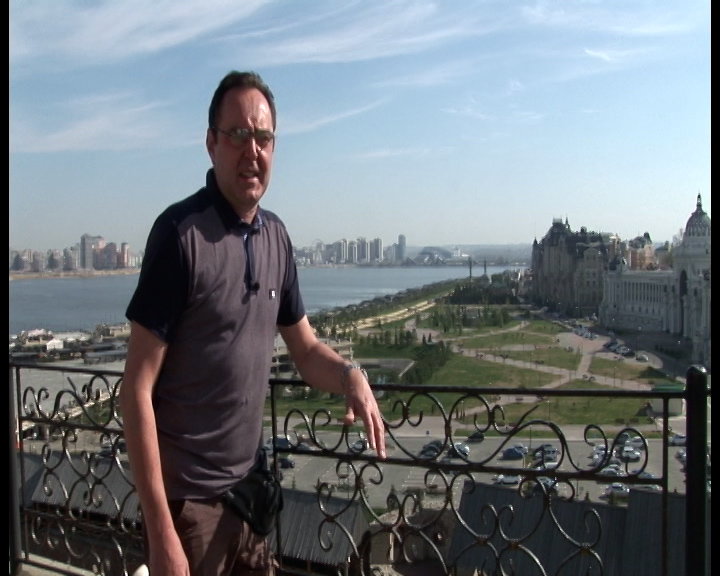
Kazan, the capital of Tatarstan, is one of the most developed and multicultural urban environments in Russia. This technological and university center surprises with its architecture: modern skyscrapers blend harmoniously with mosques, churches, and buildings from the Soviet era.
A trip to Kazan is not just a visual experience – it is also an insight into the modern identity of the Tatars, a people who successfully balance between Islamic spirituality and the globalized market. One of the most fascinating places in Kazan is the so-called Temple of All Religions – Hram svih religija. This unique architectural complex combines elements of a church, a mosque, and a synagogue, and was conceived as a cultural center for universal dialogue and spiritual connection. Unfortunately, a major fire in 2016 halted the works. Today, this building stands as a reminder of the need for religious tolerance and creative freedom.
Just thirty kilometers from Kazan is Sviazhsk, the former fortress of Ivan the Terrible, built to conquer the Kazan Khanate in 1552. Built with incredible speed – in just four weeks – this fortress is now part of UNESCO’s world heritage. During the Soviet era, the island suffered destruction, churches were demolished, and monasteries were turned into camps.
Today, the reconstructed parts of Sviazhsk once again welcome visitors, with the restored Church of All the Afflicted, a symbol of faith that survived a century of silence. Tatarstan is one of the richest regions in Russia thanks to its huge reserves of crude oil. The economy is dynamic, industry is developed, and the employment rate is high. However, what makes this republic unique is not only the economy, but also the cultural and spiritual identity of the Tatars.
Tatars make up the majority of the population (53%), followed by Russians (about 40%). The official languages are Tatar and Russian, and the culture is rich in Turkish, Slavic, and Islamic influences.
Practical information for visitors:
How to get there: direct flights to Kazan from Moscow and St. Petersburg (1.5 h)
Visa: a Russian visa is required (check current regulations)
Currency: Russian ruble
Best time to visit: May–September
Recommended locations: Kazan Kremlin, Temple of All Religions, Sviazhsk, Kul Sharif Mosque
Is Tatarstan Your Next Destination?
In the world of travel, few places combine spirituality, history, and innovation as Tatarstan does. From the legendary story of the snow leopard to modern Kazan and peaceful Sviazhsk, every step here is a story of survival, transformation, and identity.
If you want to experience a different Russia, Tatarstan is the right choice – the center of the world, at least for a moment.
Recommended links:
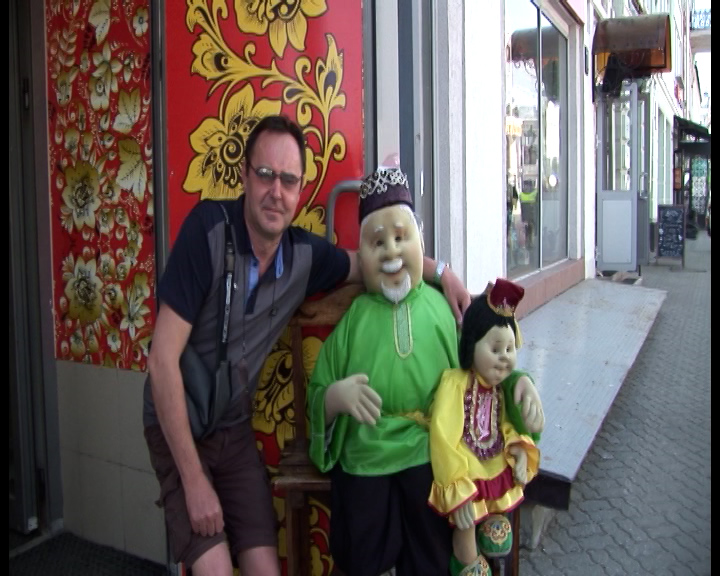
On one side of the main square are shelves full of vodka, while across the way rises the magnificent Kul Sharif Mosque — one of the largest in Europe and a symbol of Tatar faith and culture. Beside it, the bells of Orthodox churches can be heard, and the view extends to Catholic cathedrals, reflecting the harmony of religious communities living here.
Tatars, who make up about half of Tatarstan’s four million inhabitants, are proud of their tradition and culture, while Russians and other minorities contribute to a complex but harmonious social picture. The heart of the city is the Kazan Kremlin — a fortress protected by UNESCO, which preserves the memory of historical events and personalities. Among them is Musa Djalil, a poet and hero of World War II, whose monument stands at the entrance to the Kremlin.
Built in the 16th century, the Kremlin was once a symbol of the Russian conquest of the Tatars, but today it is a place where history, art, and spirituality come together. Among the nine towers, the most famous is the Spasskaya Tower, 46 meters high with a golden clock and a five-pointed star.
The Kul Sharif Mosque was built in the early 21st century on the site of an old mosque destroyed during the Russian invasion. This architectural pearl is not only a place of prayer but also a museum, where the history and spiritual tradition of Islam in Tatarstan can be learned through two galleries. The Quran is constantly recited by heart here, which is a testament to the deep faith and devotion of believers.
The oldest building in the Kremlin, the Temple of the Annunciation, was built by order of Ivan the Terrible on the site of the destroyed palace of the Tatar Khan. Over the centuries, this temple has undergone many changes and damages, but today it has been restored and is open to believers and visitors, preserving the rich Orthodox tradition.
The fortress is also adorned by the Suyumbike Tower, a symbol of the city and a monument to the glorious Tatar regent. Its history is shrouded in legends, and its height of 58 meters dominates the panorama of Kazan. A walk through this district leads through streets filled with baroque, classicist, and local motifs, which testify to the prosperity of the Tatar population in the 18th century. This part of the city, with its museums, theater, and cultural centers, represents the cradle of Tatar thought and tradition.
Tatar cuisine reflects the spirit of the people – dishes such as mutton soup, pilaf, and sweet chak-chak, along with traditional ayran, provide an authentic atmosphere. Although alcohol is only available in hotels and shops, the spirit of hospitality and taste remains indelible. In the square of the same name stands a monument to Gabdulla Tukay, the founder of modern Tatar literature, whose work continues to inspire Tatars. His birthday is celebrated as Tatar Language Day.
Kazan is not just a city – it is a living story of coexistence, faith, culture, and tradition. A place where old legends intertwine with modern life, and every corner carries a breath of history and an indelible mark of time.
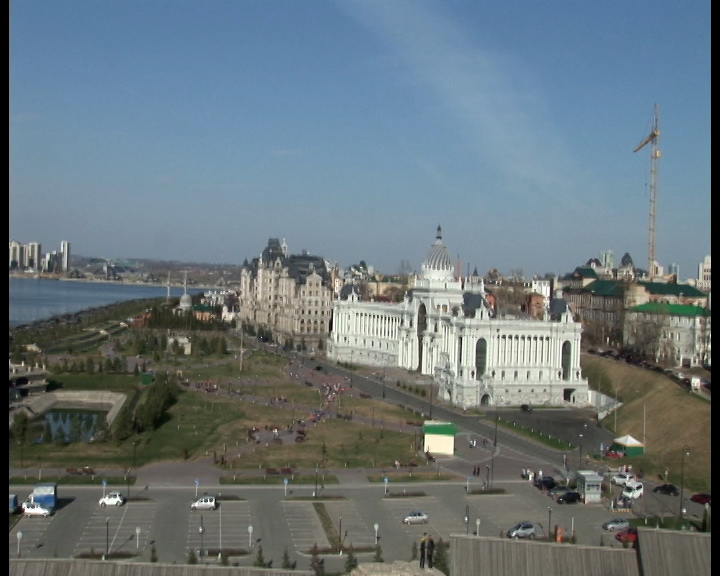
Kazan is a city where centuries meet, where tradition and the modern future intertwine, and where about four million people live – approximately half of them are Tatars, a non-Slavic people of Muslim faith. Russians make up about 40%, while the rest of the population consists of other smaller ethnic groups. This blend of cultures and faiths gives Kazan a special dimension, as religious tolerance and harmony stand out here. A modern megalopolis on the Volga A city that has transformed the oil wealth of Tatarstan into one of the most advanced centers in Russia.
Kazan boasts one of the most modern metro systems in the country and plans for two satellite cities dedicated to science and education. Here, people cheer for the Rubin football club, known throughout Europe, while everyday life takes place with respect for diversity and tradition.
Bus ride through Kazan
For security reasons, I decide to tour the city by bus today, as filming is not allowed in the metro. Kazan is a city where life is about 9% cheaper than in Belgrade, so a family of four with average expenses is comfortable with around 160,000 dinars per month, if they don’t pay rent. An 85 square meter apartment with all utilities costs around 11,000 dinars, while a liter of gasoline costs 62 dinars. An ideal place to live, especially if you like urban rhythm and culture.
Bauman Street – the heart of Kazan
This central street, which connects the Kremlin and the main Tugay Square, was once a trading and crafts street. Today, it is a row of restaurants, hotels, and boutiques, with an alley of stars dedicated to local celebrities. Among them is the tenor legend Fyodor Shalyapin, whose monument stands next to the Epiphany Church where he was baptized. Also interesting is the story of Princess Elizabeth Petrovna, who noticed a lack of mice in the city and therefore ordered 30 Kazan cats to be sent to Saint Petersburg to solve the problem. Thus the monument to Kazan cats, a symbol of this city, was created.
Panorama of Kazan and urban symbols
From the viewpoint of the Kremlin, there is a view of the northern part of the city and the confluence of the Kazanka River into the Volga. There is also the controversial, but popular building of the Ministry of Agriculture, built in the suburbs of the fortress under UNESCO protection. Freedom Square with the monument to Lenin and the building of the State Council of Tatarstan exudes history and political significance, while nearby are the buildings of the Academic Opera and Ballet, home to two international festivals.
Education and science in Kazan
Kazan is also a large university center with 44 higher education institutions, among which the most famous are the Federal University and the State Technological Institute. The number of foreign students is increasing from year to year, which contributes to the richness of cultural influences. Research centers outside the city are preparing for the future.
Sports and entertainment
The 2013 Universiade and the 2018 World Football Cup gave additional impetus to urban development and sports life. When Rubin plays football or Ak Bars hockey, the city goes quiet and everyone gathers around their teams. Gorky Street and the bakery where Alexei Maximovich Peshkov (better known as Maxim Gorky) worked are just some of the details to visit.
Care for family and children
Kazan is a city rich in children and caring for them is a priority of the authorities. With over 280 kindergartens and 200 primary schools, most of which are state-owned, family tradition and values are strongly rooted. Amusement parks and facilities for the youngest are constantly growing.
Rivers and nature
Kazan lies at the confluence of the Kazanka River into the Great Volga, the largest river in Russia. Tatarstan is rich in water – it has over 8000 lakes and numerous rivers, and fish is an important part of the local diet. The Volga is important for the economy as well as for the daily lives of residents.
The road to Kazan
The road infrastructure is developed – you can reach Moscow by train in ten hours, and by plane with one transfer from almost any part of the world. Water traffic plays a key role in the development of the city and region.
Golden Apple and the future
A modern registry office and protocol center has been built on the banks of the Kazanka, where the prestigious international tourism award “Golden Apple” is awarded. Kazan is a city with a vision, which attracts attention and respects its rich heritage and future. This city is a true treasure trove of culture and tradition, a place where the snow leopard still guards its home today. Kazan is only a few hours’ flight from home, but it brings an encounter with new worlds, new people and new stories. Those are the moments when I want to slow down time and extend the day…